Skip to content

WiFi in Motion · Cross-Border & Overland

Border to border.
One WiFi your passengers know.

Passenger WiFi for coaches, overland tours and cross-border shuttles, with two networks online at once: an indoor unit plus a second unit on the roof, each with its own live mobile connection. Four SIM slots, two active. Passengers see your branded sign-in page the whole way, and your login shows which vehicle is on which network.

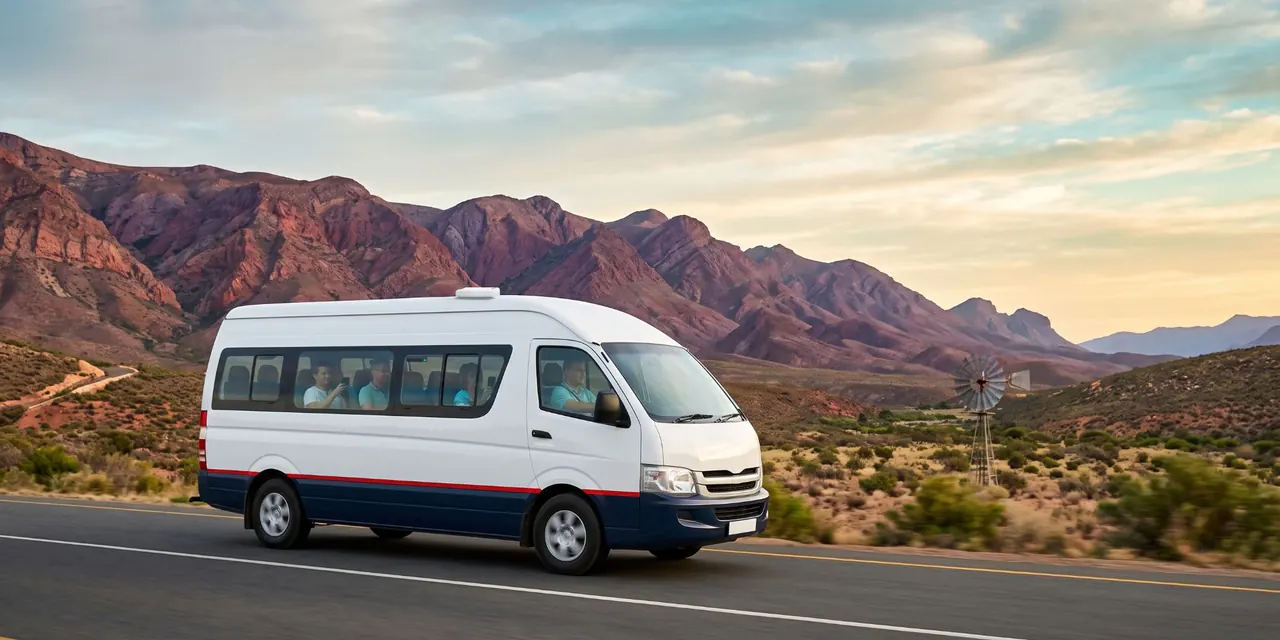
A white minibus on an open road, with a roof unit on its roof and an indoor unit in the cabin
  1. Indoor unit Network 1 · live · your sign-in page
  2. Roof unit Network 2 · live · shares the load

How it works

One trip, two live networks.

Two units, each on its own live network. In South Africa they share your passengers across two networks. Somewhere near the border, depending on where each network fades, the units change to their local SIMs one at a time, so while one changes, the other carries everyone.

One trip, two live networks A road runs from South Africa across a border post into the next country. Two units in the vehicle are each on a live South African network. Somewhere near the border, Unit 1 changes to its local SIM while Unit 2 carries everyone; a little later Unit 2 changes while Unit 1 carries everyone. The units change to their local SIMs one at a time, wherever there is signal. A live call may need to reconnect. Where neither network has signal, the WiFi drops. SOUTH AFRICA BORDER POST NEXT COUNTRY Unit 1 · indoor Unit 2 · roof 1 2 One unit at a time Near the border the units change SIM one at a time; the other carries everyone. With no signal on either, the WiFi drops. A live call may need to reconnect. South African network Local network Changing SIM One trip, two live networks A road runs from South Africa across a border post into the next country. Two units in the vehicle are each on a live South African network. Somewhere near the border, Unit 1 changes to its local SIM while Unit 2 carries everyone; a little later Unit 2 changes while Unit 1 carries everyone. The units change to their local SIMs one at a time, wherever there is signal. A live call may need to reconnect. Where neither network has signal, the WiFi drops. SOUTH AFRICA BORDER POST NEXT COUNTRY 1 2 1 2 Unit 1 · indoor Unit 2 · roof Both on South African networks, sharing passengers 1 · Unit 1 changes SIM Unit 2 carries everyone 2 · Then Unit 2 changes Unit 1 carries everyone Near the border, one at a time. With no signal on either, the WiFi drops. A live call may need to reconnect. South African network Local network Changing SIM

Straight answer: the units change to their local SIMs one at a time, wherever there is signal. A live call may need to reconnect. Where neither network has signal, nothing can carry the WiFi, and we would rather tell you now than have a passenger tell you at the border.

Before you buy SIMs

Checked on paper first

We check on paper that each network uses frequencies the unit supports, and tell you if it should work. Your SIM in the unit is the real test.

On the road

We record their signal

Signal logged on every trip: while a unit is online, our monitoring records its network and signal, so you see how each network holds up instead of guessing.

At the border

Roaming stays off

Ask each network to switch data roaming off on its SIM, and we set each SIM to its home network.
Inside the vehicle

What goes in the vehicle.

An indoor unit and a roof unit, joined by a cable, both running off the vehicle's power. Tell us 12 V or 24 V and we quote the right power fitting with the kit; your auto electrician fits it, including the roof unit's cable and seal. Passengers join your WiFi, see your sign-in page and go online over one of two live networks.

Inside the vehicle A minibus with passengers using their phones. Inside is an indoor WiFi unit; on the roof is a second unit, joined to it by a cable. Each unit holds two SIMs, one active, so two mobile networks are online at once. Both run off vehicle power, 12 V or 24 V, each with its own power feed. A passenger joins your WiFi, sees your branded sign-in page, and goes online over one of the two networks. Behind the scenes, we keep an eye on the units and you see them in the fleet view in your login. Roof unit Indoor unit active SIM spare SIM 12 V or 24 V 1 Passenger joins your WiFi 2 Sees your branded sign-in page 3 Online over a live network We keep an eye on the units Your fleet view in your login Inside the vehicle A minibus with passengers using their phones. Inside is an indoor WiFi unit; on the roof is a second unit, joined to it by a cable. Each unit holds two SIMs, one active, so two mobile networks are online at once. Both run off vehicle power, 12 V or 24 V, each with its own power feed. A passenger joins your WiFi, sees your branded sign-in page, and goes online over one of the two networks. Behind the scenes, we keep an eye on the units and you see them in the fleet view in your login. Roof unit Indoor unit active SIM spare SIM 12/24 V 1 Passenger joins your WiFi 2 Sees your branded sign-in page 3 Online over a live network BEHIND THE SCENES We keep an eye on the units Your fleet view in your login

Choose your set-up

Two units for the long road. One for shorter runs.

For coaches and cross-border

Two-unit kit

Two networks online at once. If one drops, WiFi carries on within seconds — nobody signs in again; a live call may need to reconnect.

Four SIM slots: for example two South African networks, and a local SIM for the next country in each unit.

Two-unit kit (indoor unit plus roof unit): quoted per fleet.

For shorter routes

Single unit, two SIMs

One network at a time. If your network drops, the unit changes to your second SIM — expect about a minute offline.

Two SIM slots: for example a South African SIM and a local SIM for the next country.

Vehicle kit: from R4,300 once-off per vehicle, ex VAT.

What you get

Built for the long road.

01

Your sign-in page in every vehicle

Passengers see your brand, your terms and your message the moment they join, on every leg of the trip.

02

Two networks online at once

Passengers are shared across both. If one network drops, WiFi carries on over the other within seconds and nobody signs in again.

03

A data bill you can predict

Per-passenger time and bandwidth limits, so one person streaming cannot eat the bundle for the whole vehicle.

04

Checked on paper first

Before you buy SIMs, we check on paper that each network uses frequencies the unit supports. Your SIM in the unit is the real test.

05

Signal logged on every trip

While a unit is online, our monitoring records its network and signal through each trip, so the first real trips show how each network holds up.

06

People who answer

People support Monday to Friday, 08:00 to 17:00 SAST, and we keep an eye on the units from our side.

Who does what

Your SIMs. Our setup.

The SIM cards and the data stay yours, on your own account on both sides of the border. Everything that runs on them is ours to set up and look after.

Who does what

You

The operator

  • SIM cards and data on both sidesLocal SIMs on both sides of the border, on your account, not roaming.
  • Data roaming switched offAsk each network to switch data roaming off on its SIM.
  • FittingFitting by your auto electrician, including the roof unit's cable and seal.
  • Your routesTell us the routes, the countries and where you stop.

Us

Hotwireless

  • Units set up and brandedReady for your vehicle before they leave us.
  • Both units working togetherSet up to share passengers and take over from each other.
  • SIM change-over set upWe set each SIM to its home network, and the units to change SIM one at a time.
  • Sign-in page and limitsYour branded sign-in page and per-passenger limits.
  • Paper check of your networksBefore you buy SIMs, we check each network's frequencies against the unit's. Your SIM in the unit is the real test.
  • Monitoring and fleet viewWe keep an eye on the units; you see every vehicle in your login.

Fleet view

Every vehicle, every network.

Your own login shows each vehicle by name. On a cross-border route, that means you can see which network a vehicle is on before anyone phones you.

  • Online or offline, per vehicle
  • Which mobile network each unit is on
  • A flag when the signal is weak
  • Data used

Fleet view

Your fleet — this monthSample

Five vehicles on one login. Every figure on this sheet is sample data.

Vehicles onlineSample
4 of 5
Sessions this monthSample
1 240
Vehicle Status Guests now Sessions this month Data this month
Shuttle 1 CA 123-456 Sample Online 6 310 42 GB
Shuttle 2 CA 234-567 Sample Online 4 280 38 GB
Coach 1 CA 345-678 Sample Online 11 390 61 GB
Tour van CA 456-789 Sample Offline 0 150 19 GB
Airport run CA 567-890 Sample Online 3 110 14 GB

What a fleet operator sees in their own login — per vehicle, per month.

What it costs

Priced per vehicle.

Full WiFi in Motion pricing
  • Package per vehicle: R399, R599 or R799 per vehicle per month, ex VAT, plus R100 per vehicle per month for WiFi in Motion.
  • Two-unit kit (indoor unit plus roof unit): quoted per fleet.
  • Single unit, two SIMs (vehicle kit): from R4,300 once-off per vehicle, ex VAT.
  • SIM cards and data are not included. Fleet discounts available.
  • Advertising (R199/mo) and Vouchers (R6.50 per voucher, min. 100) can be added to the Basic + Data + Guest Insights package (R799) only.

Before you call us

Six answers that make the quote quick.

  1. Your routes

    Which routes you run, and which countries they cross.

  2. Your networks

    Which mobile network you would use on each side of the border. We check on paper that each one uses frequencies the unit supports.

  3. 12 V or 24 V

    Tell us for each vehicle, and we quote the right power fitting with the kit.

  4. Power with the engine off

    Do the units stay powered with the engine off — at stops and in the border queue?

  5. Your fleet

    How many vehicles, and how many passengers in each.

  6. Your sign-in page

    Your logo and the words you want passengers to see.

FAQ

Cross-border questions.

Does it change SIM by itself at the border?

Yes, we set it up to, and it works differently for the two set-ups. With the two-unit kit, the units change to their local SIMs one at a time, somewhere near the border wherever there is signal, so while one changes the other carries everyone; a live call may need to reconnect. With a single unit, it changes to your second SIM when the first loses its network, and you can expect about a minute offline.

Will two networks make one download faster?

No. Each passenger's connection uses one network at a time; two networks mean more room for a full coach and a backup if one drops.

Can we just roam on our South African SIM?

You can, but data roaming with a full vehicle of passengers gets very expensive very quickly. Local SIMs on both sides of the border are the better way. Ask each network to switch data roaming off on its SIM, and we set each SIM to its home network.

Who supplies the SIM cards and the data?

You do, from networks on both sides of the border, on your own account: up to four SIMs per vehicle with the two-unit kit, two with a single unit. SIM cards and data are not included in our price. We help you size the data for your routes, and per-passenger limits keep the bill predictable.

Does it work in 24 V coaches?

Yes. Tell us 12 V or 24 V for each vehicle and we quote the right power fitting with the kit. Your auto electrician fits it.

Can we limit how much each passenger uses?

Yes. You set time and bandwidth limits per passenger, so one person streaming cannot use up the data for everyone else.

Can we see where a vehicle is on a map?

No. Your login shows whether each vehicle is online or offline, which mobile network each of its units is on, a weak-signal flag and the data it has used. It does not show location.

Which countries does it work in?

Any country where you have a local SIM on a network that works with the units. The two-unit kit has four SIM slots: for example two networks in South Africa, plus a local SIM for the next country in each unit. On a route through three or four countries, some countries get only one live network, with no backup there. A single unit holds two SIMs, so it covers two countries. Before you buy SIMs, we check on paper that each network uses frequencies the unit supports; your SIM in the unit is the real test. While a unit is online, our monitoring records its signal on every trip, so you can see how each network holds up.

How soon can the units be ready?

We quote the lead time with your order.

Tell us your routes.

Send us the routes you run, the countries they cross and the networks you use, and we will quote the fleet.

Or call us on 071 437 6694